Pneumonia is a serious respiratory infection that affects the lungs and can make breathing difficult if not treated on time. It may affect people of all age groups, but children, elderly individuals, and people with weak immunity are usually at higher risk.
In recent years, cases of pneumonia have increased due to pollution, seasonal infections, weakened immunity, smoking, and viral or bacterial infections. Many patients experience symptoms like fever, cough, chest pain, breathing difficulty, weakness, and fatigue.
While conventional medical care is important in severe or emergency conditions, many people also explore supportive and holistic healthcare approaches such as homeopathy for overall wellness and recovery support.


What is Pneumonia?
Pneumonia is an infection that causes inflammation in the air sacs of one or both lungs. These air sacs may fill with fluid or mucus, leading to symptoms such as cough, fever, and breathing problems.
Pneumonia may develop because of:
- Bacterial infections
- Viral infections
- Fungal infections
- Weak immune system
- Respiratory complications
The severity of pneumonia can vary from mild to serious depending on the patient’s age, immunity, and overall health condition.
Common Symptoms of Pneumonia
Symptoms may differ from person to person depending on the severity of the infection.
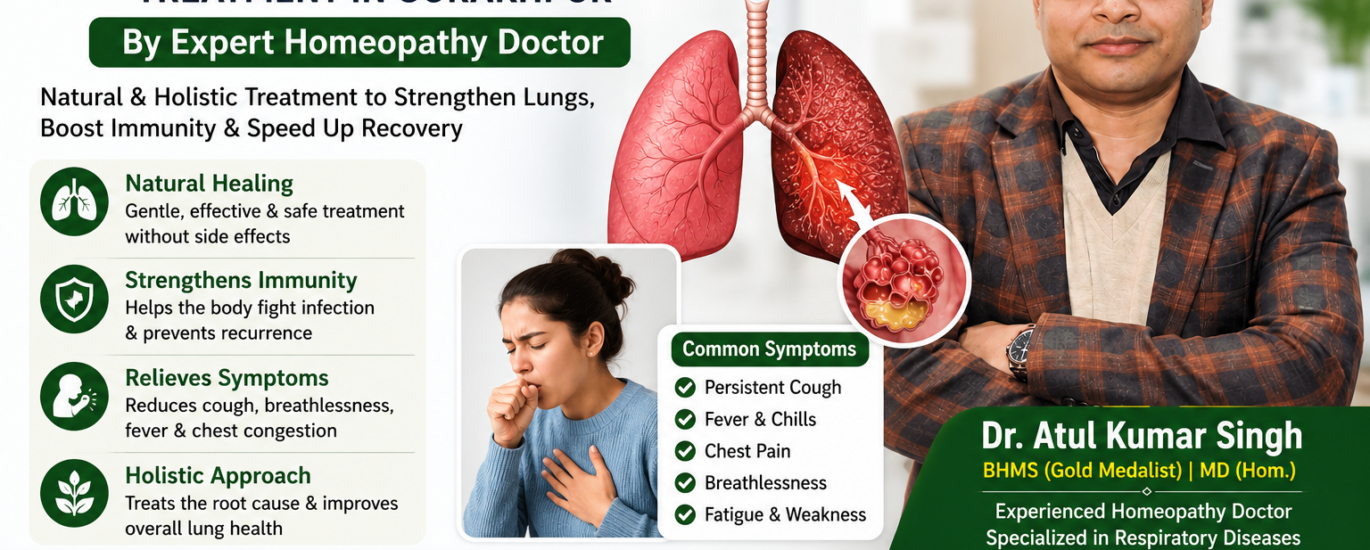
Common Symptoms Include:
- Persistent cough
- Fever and chills
- Chest pain
- Shortness of breath
- Fatigue and weakness
- Rapid breathing
- Loss of appetite
- Excess mucus production
Severe Symptoms May Include:
- Difficulty breathing
- Bluish lips or nails
- High fever
- Confusion in elderly patients
- Severe chest discomfort
If symptoms become severe, immediate medical attention is important.
Causes of Pneumonia
Pneumonia may occur due to different infections and health conditions.
Common Causes Include:
- Viral infections
- Bacterial infections
- Weak immunity
- Smoking
- Air pollution
- Chronic respiratory diseases
- Cold weather exposure
- Poor nutrition
People with asthma, diabetes, or weakened immune systems may have a higher risk of developing complications.
Risk Factors for Pneumonia
Certain groups are more vulnerable to pneumonia.
Higher Risk Groups:
- Children under 5 years
- Elderly individuals
- Smokers
- People with chronic lung disease
- Diabetic patients
- Patients with low immunity
Early diagnosis and proper treatment are important for reducing complications.
Why Many Patients Choose Homeopathy for Pneumonia Support in Gorakhpur
Many people prefer homeopathy as a supportive and holistic healthcare approach because it focuses on overall health, immunity, and recovery support.
Benefits Often Associated with Homeopathic Support
- Personalized treatment approach
- Gentle and natural care
- Support for overall wellness
- Focus on immunity and recovery
- Lifestyle and health guidance
Homeopathy is usually considered as supportive care and should not replace emergency medical treatment in severe pneumonia cases.
How Homeopathy May Help in Respiratory Health Support
During consultation, the doctor studies:
- Respiratory symptoms
- Medical history
- Immunity status
- Lifestyle habits
- Sleep quality
- Stress levels
- Previous infections
Treatment is then planned according to the patient’s overall condition.
Homeopathy May Help Support:
- Respiratory comfort
- Recovery support
- Immune health
- General weakness management
- Overall wellness
Prevention Tips for Pneumonia
Preventive care can reduce the risk of respiratory infections.
Helpful Prevention Tips
- Maintain proper hygiene
- Wash hands regularly
- Avoid smoking
- Stay hydrated
- Eat healthy foods
- Exercise regularly
- Avoid polluted environments
- Get proper rest
People with weak immunity should take extra precautions during seasonal changes.
Diet & Lifestyle Tips
Healthy lifestyle habits may support respiratory and immune health.
Recommended Foods
- Fresh fruits
- Green vegetables
- Warm soups
- Protein-rich foods
- Vitamin C-rich foods
Foods to Limit
- Junk food
- Cold beverages
- Excess fried foods
- Smoking and alcohol
Good nutrition and hydration may help support faster recovery.


How Long Can Pneumonia Recovery Take?
Recovery time may vary depending on:
- Severity of infection
- Age of the patient
- Immune health
- Existing medical conditions
- Timely treatment
Some patients recover within a few weeks, while others may need longer recovery support.
Why Choose Our Clinic for Pneumonia Support in Gorakhpur?
Our Approach
✔ Personalized consultation
✔ Holistic healthcare guidance
✔ Natural wellness support
✔ Lifestyle and dietary advice
✔ Patient-centered care
✔ Focus on overall recovery support
Our goal is to help patients improve their overall respiratory health and wellness.
Frequently Asked Questions (FAQs)
Is pneumonia contagious?
Some types of pneumonia caused by infections may spread from person to person.
Can pneumonia become serious?
Yes, severe pneumonia may require urgent medical attention, especially in elderly people and children.
Is rest important during pneumonia recovery?
Yes, proper rest and hydration are important for recovery.
Can weak immunity increase pneumonia risk?
Yes, people with weak immunity may have a higher chance of respiratory infections.
Which doctor should I consult for pneumonia treatment in Gorakhpur?
Consulting a qualified healthcare professional is important for proper diagnosis and treatment guidance.
Book Your Consultation Today
If you are experiencing persistent cough, breathing difficulty, chest discomfort, or weakness, professional medical guidance may help you understand your condition and treatment options better.
👉 Official Website:
Niramaya Homoeopathy
👉 Appointment Booking:
Book Appointment
Conclusion
Pneumonia is a respiratory infection that should never be ignored. Early diagnosis, healthy lifestyle habits, proper medical care, and supportive wellness approaches may help improve recovery and overall lung health.
If you notice symptoms like fever, cough, chest pain, or breathing difficulty, consult a qualified healthcare professional for proper medical advice and treatment.
Medical Disclaimer
This article is for educational and informational purposes only and should not be considered medical advice. Severe pneumonia may require emergency medical treatment. Always consult a qualified healthcare professional for diagnosis and treatment.